Weld Procedure Specification Guide for Quality Welding
Oct 21, 2026 ·
6m 24s
Download and listen anywhere
Download your favorite episodes and enjoy them, wherever you are! Sign up or log in now to access offline listening.
Description
The structural stability of heavy industrial assets—including pipelines, pressure vessels, and aggregate machinery—depends on the execution of sound welds. A Welding Procedure Specification (WPS) serves as a legally binding, scientifically...
show more
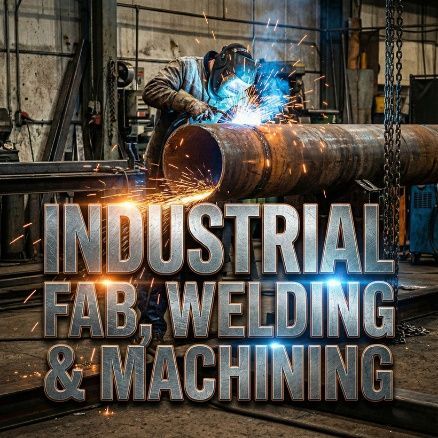
The structural stability of heavy industrial assets—including pipelines, pressure vessels, and aggregate machinery—depends on the execution of sound welds. A Welding Procedure Specification (WPS) serves as a legally binding, scientifically proven blueprint that governs welding parameters to ensure mechanical integrity, regulatory compliance, and repeat performance across field and shop applications.On this episode of Industrial Fab, Welding & Machining, the engineering team at LTJ Industrial Services breaks down essential WPS variables, procedure qualification testing, field adaptation strategies, and Industry 4.0 integration.Technical Comparison: Controlled Shop WPS vs. Field Adaptation Execution
Click here
Learn more about LTJ Industrial Services at www.ltjindustrial.com/
show less
- Environmental & Ambient Control:
- Controlled Shop WPS: Operates within controlled ambient temperatures and zero wind exposure, minimizing hydrogen-induced cracking risks.
- Field Adaptation: Requires strict preheat enforcement, temporary environmental shelters, and adjusted shielding gas flow rates to counter wind and temperature drops.
- Essential Variable Restrictions:
- Controlled Shop WPS: Maximizes deposition rates using high-heat inputs, fixed positioners, and automated sub-arc or GMAW processes.
- Field Adaptation: Restricted by out-of-position constraints (3G/4G/6G), requiring tight travel speed control to manage heat input and prevent metallurgical grain growth.
- Telemetry & Compliance Verification:
- Controlled Shop WPS: Directly integrates digital power sources that monitor voltage, amperage, and wire feed speed in real time.
- Field Adaptation: Relies on portable digital data loggers and calibrated hand-held gauges to verify interpass temperature and parameter adherence.
- Lock Down Essential Variables: Audit parameters including material base metal grouping (P-Numbers), filler metal selection (F-Numbers), preheat/interpass temperature thresholds, and travel speed ranges. Altering an essential variable mandates procedure requalification via a new Procedure Qualification Record (PQR).
- Execute Rigorous PQR Destructive Testing: Validate test coupons through destructive tensile testing, side/guided bend tests, and Charpy V-notch impact testing to ensure structural ductility and low-temperature toughness.
- Deploy Digital WPS & Telemetry Integration: Implement Industry 4.0 welding platforms to track real-time heat input ($kJ/in$), maintain automated welder continuity logs, and ensure instantaneous access to revised documentation.
Click here
Learn more about LTJ Industrial Services at www.ltjindustrial.com/
Information
| Author | Don Markland |
| Organization | Don Markland |
| Website | - |
| Tags |

Copyright 2026 - Spreaker Inc. an iHeartMedia Company

Comments