Info
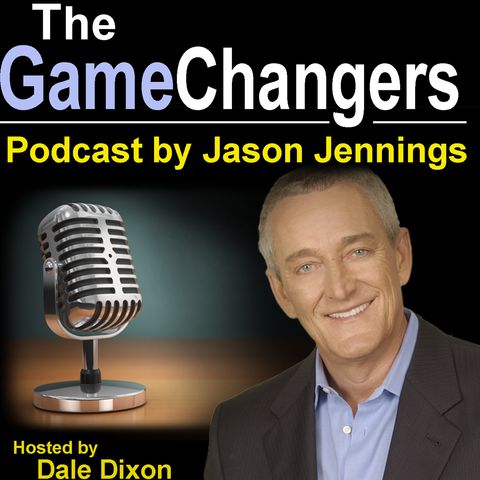
Cutting Edge Advice Designed to Give You and Your Business a Competitive Advantage Dale Dixon, a real world CEO, sits down with Jason and together they discuss the research findings...
show more
Cutting Edge Advice Designed to Give You and Your Business a Competitive Advantage
Dale Dixon, a real world CEO, sits down with Jason and together they discuss the research findings for Jason’s books and then drill down and present ways to make the material actionable.
show less
Dale Dixon, a real world CEO, sits down with Jason and together they discuss the research findings for Jason’s books and then drill down and present ways to make the material actionable.
Episodes & Posts
Episodes
Posts
6 OCT 2026 · https://www.buzzsprout.com/11786/fan_mail/newPicturing the big meeting going well can make it go worse.The night before a high-stakes meeting, the meeting shows up early. The CFO challenges the number, a board member asks the one question we hoped to dodge, and the scene stops right there, at the worst moment. Jaw tight, breath shallow, ceiling at 2 a.m. The usual advice is to swap in a better movie. The research says that can backfire.This episode starts with a scared kid, a school Shakespeare play, and a front porch aimed at the neighbor's door. From there: what astronaut Chris Hadfield did when he went blind outside the International Space Station, why reassurance made one group of high performers do worse, and the three-part NEXT MOVE practice: Notice it, Finish it, Park it.For executives, founders and senior leaders who know their material and still lose sleep before the meeting that matters.Hit play, then grab the free Field Guide: daledixonmedia.com/next
Mentioned in this episode
- Free Field Guide: daledixonmedia.com/next
- The Grip and The Blank, earlier Presence Lab episodes referenced on the show
Research and sources
- NASA STS-100 mission, April 2001. Chris Hadfield, "What I learned from going blind in space," TED, 2014.
- Hadfield, C. (2013). An Astronaut's Guide to Life on Earth.
- Wong, Q. J. J., & Moulds, M. L. (2011). Impact of anticipatory processing versus distraction on multiple indices of anxiety in socially anxious individuals. Behaviour Research and Therapy, 49(10), 700-706.
- Brown, M., & Stopa, L. (2007). Does anticipation help or hinder performance in a subsequent speech? Behavioural and Cognitive Psychotherapy, 35(2), 133-147.
- Norem, J. K., & Cantor, N. (1986). Defensive pessimism: Harnessing anxiety as motivation. Journal of Personality and Social Psychology, 51(6), 1208-1217.
- Jones, C. R., Fazio, R. H., & Vasey, M. W. (2012). Attentional control buffers the effect of public speaking anxiety on performance. Social Psychological and Personality Science, 3(5), 556-561.
- Further reading: Hinrichsen & Clark (2003); Jiang et al. (2021); Webb et al. (2010). Most of this research uses lab speech tasks and student or socially anxious samples.
It means so much if you like, subscribe and share this episode.https://www.buzzsprout.com/11786/support
29 SEP 2026 · https://www.buzzsprout.com/11786/fan_mail/newThe go-to answer to "Is AI taking my job?" is "embrace it and you'll be fine." The people using AI the most are the ones most worried about losing their jobs.It happens at the end of a one-on-one, the morning after a headline, in a joke that isn't really a joke. Someone asks the question no leader can answer with certainty. Worry about technology making jobs obsolete just hit a record high. Companies have cited AI in more than 100,000 announced job cuts this year. National news ran more than 2,000 stories on AI and jobs in three months, and almost none of them tell a leader what to say when the question comes.In Episode 300, Dale Dixon explores why the usual reassurance misses the fear underneath the question, what a study involving snakes and mild electric shocks reveals about uncertainty, and why the answer starts with where the leader sits. It closes with three moves for that conversation: Go First, Facts Not Forecasts, and What Do You Control?Plus, a tribute to the late Jason Jennings, the reason this podcast exists, including a clip from our 2020 conversation about layoffs."You can't promise their future. You can promise the chair beside them."Free Field Guide: The three moves, the circles of control, and sample lines for the conversation. Grab it at daledixonmedia.com/aifogJoin the free Presence Lab community for live Q&A: daledixonmedia.com/communityKnow a manager who's about to get this question? Send them this episode.Mentioned in this episode
The Game Changers, Episode 234, with Jason Jennings: https://www.buzzsprout.com/11786/episodes/3592687Sources and further reading
- Gallup, "More U.S. Workers Fear Losing Their Jobs to Technology" (2026)
- Gallup, "Using AI More Does Not Reassure Workers, Managers Do" (2026)
- Gallup on AI use and layoffs (July 2026)
- Challenger, Gray & Christmas, Job Cut Reports, June-August 2026
- Media Cloud, U.S. National collection, June 25-September 25, 2026
- de Berker et al., "Computations of uncertainty mediate acute stress responses in humans," Nature Communications (2016)
- Bordia, Hobman, Jones, Gallois & Callan, "Uncertainty During Organizational Change," Journal of Business and Psychology (2004)
- Gibson, Harari & Marr, "When sharing hurts," Organizational Behavior and Human Decision Processes (2018)
- Cascio, Young & Morris, "Financial consequences of employment-change decisions in major U.S. corporations" (1997)
- Yale Budget Lab, "AI Is Probably Not (Yet) the Reason for Labor Market Weakening" (2026)
- Bick, Blandin & Deming, "The Rapid Adoption of Generative AI," NBER (2024)
- Stephen Covey, The 7 Habits of Highly Effective People (1989)
https://www.buzzsprout.com/11786/support
22 SEP 2026 · https://www.buzzsprout.com/11786/fan_mail/newInterrupting someone feels rude. Sometimes not interrupting is the bigger communication mistake.Dale Dixon learned that during about fifteen years in television news, where protecting the viewer sometimes meant cutting into an answer and bringing the conversation back to the question.One live interview with a candidate for governor forced that decision in real time. Dale had three minutes, one question about accountability, and an answer that kept moving somewhere else.He interrupted.He never got the answer.But the experience left him with a question he has been working on ever since:When is the thing that feels rude actually the responsible move?In this episode of The Presence Lab, Dale examines the split-second judgment behind interruption and three practical moves for handling it:SETTLE FIRST
Get steady enough that discomfort does not make the decision for you.NAME WHO IT'S FOR
Identify who depends on the conversation being useful.BRING IT BACK
Interrupt briefly, say what you are protecting, ask one clean question, then let the other person answer. The episode also looks at research on attention, social-evaluative stress, the social cost of interruption, and evidence showing that our interruption patterns are not always as fair as we think they are.The goal is not to interrupt more.It is to develop the judgment to know when interrupting is the respectful thing to do.An interruption has to earn the cost it creates.Free Interrupt Field GuideGet the two-page guide with the three tools, sample language, a practice drill, and a seven-day interruption check:https://daledixonmedia.com/rudeJoin The Presence LabPractice communication under pressure with other leaders:https://daledixonmedia.com/communityResearch referenced in this episodeGloria Mark on attention and screen switching:
https://www.apa.org/news/podcasts/speaking-of-psychology/attention-spansDickerson & Kemeny on social-evaluative stress:
https://pubmed.ncbi.nlm.nih.gov/15122924/?utm_source=chatgpt.comHan Z. Li on cooperative and intrusive interruption:
https://journals.sagepub.com/doi/10.1177/0261927X01020003001?utm_source=chatgpt.comKatherine Hawkins on deep interruption:
https://journals.sagepub.com/doi/10.1177/0261927X91103003?utm_source=chatgpt.comDupas et al., Gender Differences in Economics Seminars:
https://www.aeaweb.org/articles?id=10.1257%2Faer.20241718Miller & Sutherland on interruptions at congressional hearings:
https://www.cambridge.org/core/journals/american-political-science-review/article/effect-of-gender-on-interruptions-at-congressional-hearings/DDD33F28A1C8ED9C162E1793D8126243Jacobi & Schweers, Justice, Interrupted:
https://scholarlycommons.law.emory.edu/faculty-articles/274/Cai et al., Let Me Just Interrupt You:
https://www.cambridge.org/core/journals/journal-of-law-and-courts/article/let-me-just-interrupt-you-estimating-gender-effects-in-supreme-court-oral-arguments/4870F0FD3BEF0E00AF46F8D64EDA2289?utm_source=chatgpt.comJeremy Paxman / Michael Howard background:
https://www.theguardian.com/media/2005/jan/31/mondaymediasection.politicsandthemedia?utm_source=chatgpt.comhttps://www.buzzsprout.com/11786/support
14 SEP 2026 · https://www.buzzsprout.com/11786/fan_mail/newYou know the material. You’ve done the work. You may even be the most knowledgeable person in the room.So why do you suddenly get nervous when the stakes go up?Sometimes it isn’t a preparation problem. It’s because you quietly took on a second job.The real job is to communicate clearly, answer the question and help the room make a good decision. The second job is managing what everyone thinks about you: Make sure I look smart. Don’t get caught without an answer. Don’t let them see me struggle.Dale calls that second job The Grade.In this episode of The Presence Lab, Dale examines the psychology behind why capable leaders can become more anxious, defensive and self-conscious when they feel evaluated. You’ll learn why wanting to perform well is different from trying not to look bad, how self-evaluation steals attention from the room, and why a five-word answer like “I don’t know. I’ll find out” can become surprisingly difficult under pressure.Dale also examines two recent real-world examples, including Flock Safety CEO Garrett Langley’s response to questions about misuse of the company’s license-plate-reader network and Georgia Tech head coach Brent Key’s response after a difficult loss, to show the difference between defending your reputation and defending the work.You’ll leave with three practical moves:
- Name the second job before you enter the room.
- Ride sweep by asking, “What does this room need from me in the next twenty minutes?”
- Grade the work, not yourself after the meeting.
Plus, Dale gives you a simple test for your own high-pressure answers: What did that sentence defend, the mechanism, the recommendation, or me?Get the free two-page The Grade Field Guide at daledixonmedia.com/grade.Join The Presence Lab community at daledixonmedia.com/community.If this episode gives you language for something you’ve experienced, follow The Presence Lab and send it to someone who does high-stakes work.https://www.buzzsprout.com/11786/support
9 SEP 2026 · https://www.buzzsprout.com/11786/fan_mail/newYou notice the folded arms. The silence. The lack of questions. The person looking down at the table.You read the room.Then you make the dangerous leap: you decide what all of it means.In this episode of The Presence Lab, Dale Dixon shares a university classroom experience where he was paying close attention to the audience, adapting in real time, and still getting the read wrong.The problem wasn’t that he failed to notice the signals. The problem was the meaning he attached to them.That same mistake shows up in boardrooms, presentations, team meetings, sales conversations, and difficult one-on-ones. Experience gives leaders useful pattern recognition, but it can also cause us to complete the story before we have enough evidence.You’ll learn how to:
- separate observation from interpretation
- recognize when experience is autocompleting the room
- look for patterns instead of reacting to one person
- test your read before changing course
- stay curious when pressure starts pulling your attention inward
The three practical moves are Split the Sentence, Count to Three, and Test the Read.The goal isn’t to become better at guessing what everyone is thinking. It’s to become better at noticing when the room in front of you is different from the one in your head. That is the central distinction the final episode builds toward. Free Field Guide:
https://www.daledixonmedia.com/thereadJoin The Presence Lab community:
https://www.daledixonmedia.com/communityhttps://www.buzzsprout.com/11786/support
31 AUG 2026 · https://www.buzzsprout.com/11786/fan_mail/newHow does a bad decision survive the idea, production, internal review and final approval before somebody finally says, “We shouldn’t do this”?That’s the leadership question behind the Good Good Golf and Callaway controversy.A co-branded ad drew widespread backlash after depicting Good Good co-founder Garrett Clark shoving fellow creator Alexis Miestowski to the ground. Callaway later acknowledged that it had reviewed and approved the ad before it was posted.The consequences went well beyond social media criticism. Callaway ended its relationship with Good Good, retailers pulled merchandise, Golf Channel canceled the current season of Big Break x Good Good, and Good Good stepped away as title sponsor of the PGA Tour event in Austin. Those details reflect the updated reporting reviewed for this package. The more useful question for a leader is what happened before the public ever saw the mistake.In this episode of The Presence Lab, I use the Good Good and Callaway case, along with Meta’s proposed settlement of up to $18 billion over state claims concerning child safety on Facebook and Instagram, to examine what happens when organizational judgment fails.I’ll walk through the crisis framework I’ve taught for years:Own it. Get clear about what happened and take responsibility for what actually belongs to you.Fix it. Go beyond the apology and find the conditions that allowed the problem to happen.Prevent it. Build the judgment, systems and lived values that help people make better decisions before the next crisis arrives.The prevention piece is where this gets personal. I’ll share a values exercise my family worked through over several dinners and how five very simple values became something we could actually use when making decisions.That experience changed the way I think about corporate values.Values on a wall don't do much. Values that are identified, discussed, modeled and deliberately used in real decisions can become part of an organization's protection system.There’s a practical test you can run with your own leadership team: Take one difficult decision from the past 30 days and put your company values beside it. Which value actually influenced the decision? What did honoring it cost?Your answers may tell you whether you have values your organization lives by or simply values your organization publishes.In this episode:
- Why Callaway’s approval of the Good Good ad is the most interesting part of the story
- What effective ownership sounds like after an organization makes a mistake
- Why explaining intent too quickly can weaken a crisis response
- How to investigate the conditions that allowed a bad decision instead of simply adding more bureaucracy
- What the Meta settlement adds to the conversation about values, incentives and tradeoffs
- How lived values can improve judgment before a crisis
- A simple exercise for testing whether your corporate values actually influence decisions
Learn more about executive communication coaching and The Presence Lab at https://www.daledixonmedia.com/?utm_source=chatgpt.com. https://www.daledixonmedia.com/Join the free https://www.daledixonmedia.com/community?utm_source=chatgpt.com https://www.daledixonmedia.com/communityhttps://www.buzzsprout.com/11786/support
24 AUG 2026 · https://www.buzzsprout.com/11786/fan_mail/newYou can work hard on your communication and still leave the people around you experiencing the same behavior.That’s the uncomfortable problem with self-awareness: knowing what you want to change doesn’t prove that you changed it.In this episode of The Presence Lab, Dale Dixon explores how senior leaders can tell whether communication improvement is actually showing up where it counts, especially when pressure makes old habits easier to reach.You’ll meet three practical tools: The Retell, The Replacement, and The Outside Score. Together, they create a better standard than good intentions, one successful meeting, or your own assessment of how you’re doing.The real question is simpler:Can the people who experience you see the difference?Get The Scorecard Field Guide and put the framework into practice at daledixonmedia.com/scorecard.#ExecutiveCommunication #LeadershipDevelopment #ExecutivePresencehttps://www.buzzsprout.com/11786/support
17 AUG 2026 · https://www.buzzsprout.com/11786/fan_mail/newYou didn't lose your point. You watched yourself soften it. One skeptical look, and "we should do this" turns into "I think maybe we could look at this." For executives, founders, and senior leaders who already know their material, that reflex quietly costs you the room.So how do you sound confident when someone challenges you? Not by faking certainty. You own what you know, and you hedge only the unknown. There's a hedge that protects the truth, and a hedge that only protects you. One is honest. The other is a leak. The line to carry into the next hard room: hedge the unknown, own what you know.Dale went looking for a CEO who got this wrong. Instead, on live TV under real pressure, a Target CEO did the opposite of what Dale expected, and became the clearest lesson in the episode.In this episode:
• Why strong leaders weaken their best language the moment they're challenged
• How to tell whether the uncertainty is real or just nerves
• What to do when someone pushes back and nothing has actually changed
• A free Field Guide built to drill it in a weekGrab the Field Guide and practice it live inside The Presence Lab community: daledixonmedia.com/communityIf this names something you've felt, follow the show, and send it to a leader who softens their best ideas the second they get pushback.Hosted by Dale Dixon: 15 years in broadcast news, two decades coaching leaders on camera, and author of Sweating Bullets.Sources: Brian Cornell, CNBC Evolve Global Summit, November 2, 2023. Research on hedging language and perceived credibility: Hosman (1989); Erickson, Lind, Johnson & O'Barr (1978). Full citations in the Field Guide.https://www.buzzsprout.com/11786/support
9 AUG 2026 · https://www.buzzsprout.com/11786/fan_mail/newThe opening of a talk isn't a scripting problem. It's a state problem. Here's what happens in the first thirty seconds, and three moves that keep your best material in reach when the pressure hits.Most speakers treat the opening of a talk as a writing problem. But you can have the perfect opening sitting on slide six and still walk on stage and reach for "I'm so excited to be here."
That's not a scripting problem. It's a state problem.
This episode breaks down what actually happens in the first thirty seconds of a high-stakes talk. Why your body peaks the moment you start. Why the room is already reading you before you feel settled. Why pressure quietly trades your most interesting self for your safest one. Then the three moves that keep your best material in reach:
1. Find the live wire - start where something turns, not with the background.
2. Know the first line cold - decide it calm, so stage-you just picks it up and goes.
3. Cross the threshold - the last few seconds before you speak, run the same way every time.
FREE FIELD GUIDE
The Open Field Guide: a self-audit, three drills, and a seven-day tracker to run before your next talk. Grab it free at https://daledixon.me/open
https://www.buzzsprout.com/11786/support
3 AUG 2026 · https://www.buzzsprout.com/11786/fan_mail/newYou know the material. Then someone asks a difficult question, the room turns toward you, and your mind goes completely blank.Why does your mind go blank under pressure? More importantly, how do you recover without bluffing, rambling, or filling the silence with an answer you immediately regret?In this episode of The Presence Lab, Dale Dixon tells the story of freezing during a live television report on his first day at an NBC affiliate. The experience revealed an important distinction: knowing the answer, accessing the answer, and producing it quickly are three different skills.You’ll learn why stress and social evaluation can crowd working memory, why the room sees far less panic than you feel, and how preparation creates the retrieval paths that make strong live answers possible.Dale shares three practical tools:Own the Gap
Use silence without treating the pause as a loss of credibility.Build the Handle
Paraphrase the question, remove the emotional clutter, and give your mind a clean retrieval cue.Build the Index
War-game difficult questions, organize your key messages, and build a story library before the pressure arrives.You’ll also learn how to say “I don’t know” without weakening your authority, how to answer hostile questions without getting pulled into a private argument, and why thinking on your feet rarely begins on your feet.This episode is for executives, emerging leaders, public speakers, spokespersons, and anyone who needs to think clearly and answer questions under pressure.Download The Blank Field Guide, including the three recovery tools, a question war-game, a Message Map prompt, and a story-index template:https://daledixon.me/blankJoin the free Sphere Presence Lab for early episode access, Field Guides, live Q&A, and practical training for communicating under pressure:https://daledixon.me/communitySupport The Presence Lab Podcast:https://www.buzzsprout.com/11786/supportYou don’t lose your intelligence when the room gets hard. You lose access. Build the index, and the words find their way home.https://www.buzzsprout.com/11786/support
Cutting Edge Advice Designed to Give You and Your Business a Competitive Advantage Dale Dixon, a real world CEO, sits down with Jason and together they discuss the research findings...
show more
Cutting Edge Advice Designed to Give You and Your Business a Competitive Advantage
Dale Dixon, a real world CEO, sits down with Jason and together they discuss the research findings for Jason’s books and then drill down and present ways to make the material actionable.
show less
Dale Dixon, a real world CEO, sits down with Jason and together they discuss the research findings for Jason’s books and then drill down and present ways to make the material actionable.
Information
| Author | Jason Jennings |
| Organization | Jason Jennings |
| Categories | Business |
| Website | - |
| - |

Copyright 2026 - Spreaker Inc. an iHeartMedia Company
