Contacts
Info
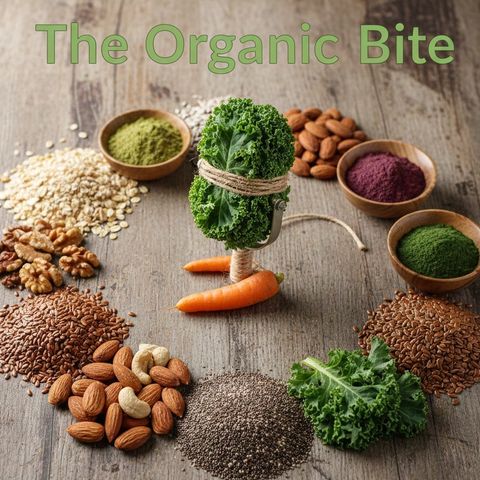
The Organic Bite is your go-to podcast for real conversations about real food. From organic farming and clean eating to sustainability and mindful living, each episode takes a bite out...
show more
The Organic Bite is your go-to podcast for real conversations about real food. From organic farming and clean eating to sustainability and mindful living, each episode takes a bite out of what it truly means to eat well. Join us as we explore where food comes from, how it’s grown, and how choosing organic can nourish both your body and the planet.
show less
Episodes & Posts
Episodes
Posts
29 OCT 2026 · Have you ever wondered if one of the simplest grains in your kitchen could make your everyday meals more interesting? In a world where people are becoming more conscious of what they eat, it's time to rediscover an ancient grain that deserves more attention: millet.
Welcome to today's podcast, where we'll explore why millet is making a comeback, what makes it special, and how you can easily include it in your daily meals.
What Is Millet?
Millet is an ancient cereal grain that has been enjoyed by different cultures for generations. Despite its small size, it is a versatile ingredient that can be used in many delicious recipes. Today, millet is gaining popularity among people looking for wholesome ingredients and alternatives to commonly used grains.
One option worth exploring is hulled millet. Hulled millet has had its hard, inedible outer husk removed, leaving the edible grain ready to be cooked. It has a mild, slightly nutty flavor that works well in both sweet and savory dishes.
Why Does Millet Deserve a Place on Your Plate?
One of the biggest advantages of millet is its versatility. It can be part of breakfast, lunch, or dinner, making it easy to experiment with different recipes.
Millet provides nutrients such as fiber, iron, magnesium, and plant-based protein. It is also naturally gluten-free, making it an option for people following a gluten-free diet. However, anyone with celiac disease should check product labeling and cross-contamination precautions.
Another reason to try millet is its simple preparation. You don't need complicated cooking techniques or expensive ingredients to turn it into a satisfying meal.
Easy Ways to Enjoy Millet
Let's talk about how you can bring millet into your kitchen.
For breakfast, try making creamy millet porridge with milk or your favorite plant-based alternative. Add fresh fruit, nuts, or a little cinnamon for extra flavor.
For lunch, prepare a colorful millet bowl with roasted vegetables, leafy greens, beans, and your favorite dressing. It's a delicious way to combine whole grains with a variety of other ingredients.
For dinner, use cooked millet to make vegetable patties or serve it as a side dish instead of rice. You can also season it with garlic, herbs, and vegetable broth for a flavorful meal.
The possibilities are endless, and experimenting with different ingredients can make healthy cooking more enjoyable.
Discover Quay Naturals Organic Hulled Millet
If you're ready to explore this ancient grain, Quay Naturals https://quaynaturals.com/products/organic-hulled-millet is one product to consider. Made with organic hulled millet, it offers a simple ingredient that can fit into a variety of home-cooked recipes.
Its mild, nutty flavor makes it easy to pair with different ingredients, whether you're preparing a warm breakfast or a savory dinner. You can explore the product and discover more at the Quay Naturals website.
Millet reminds us that eating well doesn't always require complicated recipes or trendy ingredients. Sometimes, the answer is simply rediscovering wholesome foods that have been enjoyed for generations.
So, why not make millet part of your next meal? Try a new recipe, experiment with flavors, and discover how this small grain can bring variety to your plate.
Thank you for listening to today's podcast. Until next time, keep exploring, keep cooking, and make every meal an opportunity to discover something nourishing and delicious!
20 OCT 2026 · Hello everyone, and welcome to our podcast! We’re so happy to have you here. Today, we’re going to explore an interesting topic that might change the way you look at everyday cooking: “The Secret Ingredient Behind Restaurant-Style Textures.”
Have you ever wondered why restaurant dishes have perfectly thick sauces, crispy coatings, and smooth, creamy desserts? The secret might be a simple kitchen ingredient: https://quaynaturals.com/products/organic-corn-starch! This versatile ingredient can help transform everyday recipes into delicious creations with the perfect texture.
Let’s start with sauces and gravies. Have you ever prepared a sauce that turned out too thin or watery? Corn starch can help solve this problem. Simply mix it with cold water to make a smooth slurry, then stir it into a hot sauce or gravy. As it heats, the mixture thickens, creating a smooth and glossy consistency similar to what we enjoy in many restaurant dishes.
Next, let’s talk about crispy food! Have you ever enjoyed crunchy fried vegetables or crispy homemade snacks? Corn starch can help create a lighter, crispier coating when used in the right proportions. Combined with suitable ingredients and proper cooking techniques, it can help you achieve that satisfying crunch right in your own kitchen.
But that’s not all! Corn starch is also useful in baking and desserts. It can help create tender baked goods and is commonly used to thicken puddings, custards, and fruit fillings. Whether you’re preparing a creamy dessert for your family or baking something special for guests, corn starch can be a useful kitchen companion.
Now, you might be wondering: does the quality of your ingredients matter? Absolutely! Choosing ingredients that suit your cooking needs is an important part of preparing delicious meals.
This brings us to Quay Naturals Organic Corn Starch. It offers home cooks an organic option for a versatile kitchen staple. Whether you’re thickening gravies, preparing desserts, or experimenting with new recipes, it’s worth exploring how this ingredient can fit into your everyday cooking routine.
Remember, achieving restaurant-style textures isn’t just about ingredients. The right techniques matter, too. Always mix corn starch with cold water before adding it to hot liquids, stir thoroughly to avoid lumps, and follow the appropriate cooking temperature for your recipe.
So, the next time you prepare a glossy sauce, a crispy snack, or a smooth pudding, remember that sometimes the smallest ingredients can make a big difference!
Thank you for listening to our podcast! We hope you enjoyed discovering the secret behind restaurant-style textures. Stay tuned for more exciting tips, useful kitchen secrets, and inspiration to make your everyday cooking more enjoyable.
Until next time, happy cooking!
16 OCT 2026 · Welcome back to the podcast! Today, we’re talking about an ingredient that can be useful for anyone exploring gluten-free cooking and baking: https://quaynaturals.com/products/organic-brown-rice-flour.
If you’ve ever tried making gluten-free pancakes, cookies, muffins, or brownies, you may have noticed that getting the right texture can be a little tricky. Without gluten, baked goods can sometimes turn out too dry, dense, or crumbly. This is where brown rice flour can become a useful ingredient.
Brown rice flour is made by grinding brown rice into a fine powder. Unlike white rice flour, it retains the bran and germ, which contribute fiber and other nutrients. It also has a mild, slightly nutty flavor that works well in both sweet and savory recipes.
One reason I find brown rice flour interesting is its versatility. You can use it in different recipes without significantly changing their overall flavor. For example, if you enjoy homemade pancakes for breakfast, brown rice flour can be a good ingredient to experiment with. Combined with eggs or a suitable alternative, milk, and a little baking powder, it can help create a satisfying gluten-free breakfast.
It can also be useful when making brownies and cookies. Its mild flavor pairs nicely with ingredients such as cocoa powder, chocolate, cinnamon, and vanilla. However, the final texture depends on the recipe, the fineness of the flour, and the other ingredients you use.
Another advantage is that brown rice flour isn't limited to sweet baking. You can also experiment with it in savory cooking. For example, it can be used as a coating for vegetables before baking or frying, helping create a crisp exterior when the recipe and cooking method are suitable. It may also work as a thickening ingredient in certain soups and sauces.
One important thing to remember, though, is that brown rice flour usually works best as part of a balanced gluten-free recipe rather than as a direct replacement for every type of flour. Since it doesn't contain gluten, it cannot provide the same elasticity and structure as conventional wheat flour.
This means you may need to combine it with other gluten-free flours or starches to achieve the texture you want. Ingredients such as eggs or suitable binding alternatives can also help hold baked goods together. The right combination depends on whether you're making bread, pancakes, cookies, or cakes.
For example, if you're preparing gluten-free muffins, brown rice flour can provide the main flour component, while another gluten-free ingredient may help improve softness and structure. Following a tested recipe is often the easiest way to get started before experimenting with your own proportions.
It's also worth paying attention to ingredient quality. Choosing organic brown rice flour may suit your preference for organically grown ingredients, but it's still important to check the product information and understand how the flour is processed. If you need to avoid gluten strictly, remember that naturally gluten-free rice flour can still be exposed to gluten through cross-contact during manufacturing or handling.
For people exploring gluten-free cooking, organic brown rice flour can therefore be a practical ingredient to keep in the pantry. It offers several possibilities, from breakfast favorites to homemade treats and savory dishes.
So, the next time you're preparing a gluten-free recipe, consider giving brown rice flour a try. Rather than expecting it to work exactly like wheat flour, focus on how it combines with other ingredients to create the flavor and texture you're looking for.
That’s all for today’s episode! If you're experimenting with gluten-free baking, remember that choosing the right flour is only one part of the process. Understanding how ingredients work together can help you create better recipes and enjoy more variety in your kitchen.
8 OCT 2026 · Welcome back to the podcast! Today, we’re talking about an ingredient that often gets overlooked when people start experimenting with gluten-free baking : https://quaynaturals.com/products/organic-tapioca-starch-flour.
If you’ve ever tried making gluten-free bread, cookies, pancakes, or cakes, you may have noticed that getting the right texture can be a little tricky. Without gluten, baked goods can sometimes turn out too dense, dry, crumbly, or simply different from what you’re used to. This is where tapioca starch can become a useful ingredient.
Tapioca starch flour is made from the starchy part of the yuca, or cassava, root. Unlike some gluten-free flours that are made from whole grains, nuts, or seeds, tapioca starch is mainly used to contribute structure and texture to recipes.
One reason I find it interesting is its ability to help create a softer and more flexible texture. When combined with other gluten-free flours, tapioca starch can help balance out some of the dryness or heaviness that can occur in gluten-free baking.
Think about something like a gluten-free pizza crust. You don’t necessarily want it to break apart as soon as you pick up a slice. Depending on the recipe, tapioca starch can help contribute to a more elastic and chewy texture.
It can also be useful when you’re looking for crispiness. In some recipes, tapioca starch can help create a lighter, crisp exterior. That makes it useful beyond cakes and bread. You’ll find it can work in things like coatings, crackers, and other baked or cooked foods.
Another advantage is versatility. Tapioca starch isn’t limited to baking. It can also be used as a thickening ingredient for sauces, soups, gravies, and fillings. So, if you keep it in your pantry, you may find yourself reaching for it in more recipes than you originally expected.
One important thing to remember, though, is that tapioca starch usually works best as part of a recipe rather than as a complete replacement for every other flour. Gluten-free baking often depends on combining different ingredients to achieve the desired balance of flavor, structure, moisture, and texture.
For example, you might combine a grain-based gluten-free flour with tapioca starch to create a recipe that has both substance and a lighter texture. The exact amount depends on what you’re making, so following a tested recipe is usually the easiest place to start.
For people exploring gluten-free cooking, tapioca starch flour can therefore be a practical ingredient to understand. It may not be the star of the recipe, but it can play an important supporting role.
So, the next time a gluten-free recipe calls for tapioca starch, don’t think of it as just another ingredient on the list. It can be there specifically to help improve the texture and overall eating experience.
That’s all for today’s episode. If you’re experimenting with gluten-free baking, try paying attention not just to the flour you use, but also to the ingredients that help bring the texture together.
2 OCT 2026 · Welcome to “What’s Inside?”, the podcast where we explore the stories behind the ingredients we use every day. From where they come from to how they make their way into our kitchens, we’re here to discover what’s really inside the foods we love.
Today, we’re talking about https://quaynaturals.com/products/chia-seeds—tiny seeds that have become a popular addition to modern diets. But what makes these little seeds so interesting? Where do they come from, what makes them special, and how can you easily include them in your everyday meals? Let’s find out.
Chia seeds come from a plant called Salvia hispanica. Although they’re tiny in size, they have a fascinating history and have been used as a food source for centuries. Today, they’re found in kitchens around the world, appearing in everything from breakfast bowls and smoothies to desserts and baked goods.
So, what makes chia seeds such an interesting ingredient?
For starters, chia seeds naturally contain fiber, protein, healthy fats, and important minerals. They also contain antioxidant compounds. Their versatility makes them especially convenient—you can add them to meals without needing to completely change your regular diet.
But perhaps the most fascinating thing about chia is what happens when you add liquid.
Drop chia seeds into water, milk, or your favorite plant-based drink, and give them some time. They absorb the liquid and develop a soft, gel-like texture. This simple characteristic opens up a whole world of recipes.
You can sprinkle chia seeds over oatmeal, mix them into yogurt, blend them into smoothies, or create a delicious chia pudding. And the best part? Many of these recipes require very little preparation.
Now, let’s take a step back and look at where chia actually begins.
Before it reaches your breakfast bowl, every chia seed has a journey. It starts with farmers growing and harvesting the crop, followed by processing, packaging, and eventually making its way to your kitchen.
That’s where sourcing becomes an important part of the story.
Quay Naturals focuses on organic, gluten-free, and non-GMO chia seeds, while also highlighting sustainable farming practices and relationships with farmers. For consumers, understanding this journey can make us more aware of the connection between the food we buy and the people and processes behind it.
And perhaps that’s the real beauty of chia.
It doesn't need to be complicated. A spoonful can go into your morning oats, a smoothie, yogurt, or a simple overnight chia pudding. It’s an easy ingredient that can fit naturally into different meals and lifestyles.
So, the next time you see those tiny seeds in your kitchen, remember that there’s much more to chia than meets the eye. From the farm to your breakfast bowl, every seed has a story.
Thank you for listening to “What’s Inside?” We hope you enjoyed discovering the story behind chia and found some inspiration for your own kitchen.
Until next time, keep exploring, keep learning, and keep discovering what’s inside the foods you enjoy.
Thanks for listening!
18 SEP 2026 · What if one of the simplest additions to your daily diet was also one of the most interesting?
It’s tiny. It’s naturally plant-based. It has been part of human diets for centuries—and today, it’s finding its way into smoothies, breakfast bowls, salads, and baked foods.
We’re talking about https://quaynaturals.com/products/organic-ground-flax-seed.
Welcome to today’s episode, The Flaxseed Effect: Why This Tiny Seed Matters.
So, what makes flaxseed worth talking about?
At first glance, it might not look particularly impressive. But beneath that small outer shell is a combination of nutrients that has made flaxseed a popular choice for people looking to add more plant-based nutrition to their everyday meals.
One of its biggest highlights is fiber. Fiber is an important part of a balanced diet, and adding fiber-rich foods to everyday meals can be a simple way to make your overall diet more nourishing.
Flaxseed also contains plant-based omega-3 fatty acids, specifically alpha-linolenic acid, or ALA. Omega-3s are commonly associated with foods such as fatty fish, but flaxseed offers a plant-based source.
And then there are lignans—naturally occurring plant compounds that are found in particularly high amounts in flaxseed.
But here's where flaxseed gets even more interesting: it doesn't have to mean changing your entire routine.
You can simply add it to foods you already enjoy.
A spoonful of ground flaxseed can be mixed into a morning smoothie. You can sprinkle it over oatmeal or yogurt. It can be incorporated into pancake or muffin recipes, or even added to salads and other everyday dishes.
And that's perhaps the real appeal of flaxseed.
It isn't necessarily about following a complicated wellness routine. It's about making small, practical choices that fit naturally into your lifestyle.
There is also a reason many people prefer ground flaxseed rather than using the whole seed. Ground flaxseed is convenient and easy to incorporate into everyday recipes.
For example, Quay Naturals’ Organic Ground Flax Seed is cold-milled and designed to make adding flax to everyday meals simple.
Whether you're blending it into a smoothie, stirring it into breakfast, or experimenting with baking, it can become an easy pantry staple.
Of course, no single ingredient is a magic solution for health. A nutritious lifestyle comes from the bigger picture—variety, balance, movement, hydration, and consistently making choices that work for you.
But sometimes, improving that bigger picture can start with something very small.
And that's what makes flaxseed so fascinating.
A tiny seed. A surprisingly rich nutritional profile. And countless simple ways to make it part of your everyday meals.
So the next time you see that little spoonful of ground flaxseed, remember: small doesn't always mean insignificant.
Sometimes, the smallest ingredients can make the biggest difference to how we think about everyday nutrition.
Thanks for listening to The Flaxseed Effect. Until next time, keep exploring the simple ingredients that can make everyday eating a little more nourishing.
2 SEP 2026 · Welcome to the podcast! We’re so glad you’re here. Today, we’re talking about something every baker wants to achieve—moist, tender, delicious baked goods, especially when it comes to gluten-free baking.
Have you ever baked a gluten-free cake or cookie only to find that it turned out dry, crumbly, or lacking the texture you were hoping for? If so, you’re definitely not alone. One of the biggest challenges in gluten-free baking is creating treats that are soft, moist, flavorful, and satisfying. https://quaynaturals.com/products/blanched-almond-flour can be a wonderful ingredient to explore when you’re looking for a rich and tender texture in your gluten-free recipes.
But what exactly is blanched almond flour? It’s made from almonds that have had their skins removed before being finely ground into a smooth flour. This creates a light-colored flour with a fine texture that works beautifully in many baking recipes.
One of the reasons almond flour is so popular is its natural richness. Because it comes from almonds, it naturally contains fat, which can contribute to a moist and tender texture in baked goods.
Think about your favorite brownie. You want it to be rich, soft, and fudgy—not dry or crumbly. Blanched almond flour can help create that satisfying texture while adding a subtle nutty flavor.
And it’s not just brownies. Almond flour can be used in cookies, cakes, muffins, scones, macarons, pancakes, and plenty of other creative recipes.
However, there’s something important to remember: almond flour doesn't always work as a simple one-to-one replacement for wheat flour. Wheat flour contains gluten, which provides structure and elasticity. Almond flour behaves differently, so recipes may require adjustments to ingredients and measurements.
That’s why successful almond-flour baking is about more than simply replacing your regular flour. It’s about understanding how the ingredient works and choosing recipes designed to make the most of its unique qualities.
If you’re new to baking with almond flour, start with a recipe specifically developed for it. Follow the measurements carefully, pay attention to moisture levels, and keep an eye on baking time. With a little practice, you’ll quickly learn how versatile this ingredient can be.
Ultimately, gluten-free baking doesn’t mean you have to sacrifice flavor, softness, or texture. With the right ingredients and techniques, you can create baked goods that are just as enjoyable as your favorite traditional treats.
And that’s the secret we wanted to share with you today: Blanched Almond Flour can be a wonderful ingredient for creating rich, moist, and tender gluten-free baked goods.
Thank you so much for joining us on today’s episode! We hope you learned something new and feel inspired to bring some almond-flour creativity into your kitchen.
If you enjoyed this episode, don’t forget to subscribe, follow the podcast, and share it with another baking enthusiast.
Until next time, keep experimenting, keep baking, and most importantly, keep enjoying every delicious bite.
Thanks for listening, and we’ll see you in the next episode!
20 AUG 2026 · Welcome to the show! We’re so glad you’re here. Today, we’re talking about an ingredient that’s becoming increasingly popular among people who are exploring natural alternatives to traditional sweeteners: https://quaynaturals.com/products/organic-coconut-sugar.
From our morning cup of coffee to homemade desserts, baked treats, pancakes, and everyday recipes, sugar is something many of us enjoy regularly. But as we become more conscious about the ingredients we use, an important question comes up: Is there a different way to enjoy sweetness?
That’s exactly what we’re exploring in today’s episode.
So, what is Organic Coconut Sugar, where does it come from, and why are more people becoming interested in it?
Organic Coconut Sugar is made from the sap of coconut palm blossoms. It has a naturally rich, caramel-like flavor that can add a unique taste to everyday recipes. One of the interesting things about it is its versatility. It can be used in a variety of foods and beverages where you would traditionally use regular sugar.
But before we decide whether it belongs in our kitchen, let’s take a closer look.
When we hear terms such as “organic,” “natural,” and “unrefined,” what do they actually mean? How is Organic Coconut Sugar produced? How does it compare with conventional white or brown sugar? And what should consumers consider when choosing a sweetener?
These are important questions because choosing an alternative sweetener doesn't necessarily mean that we should think of it as a magic solution. Instead, it’s about understanding the ingredients we consume and making choices that work for our individual preferences and lifestyles.
Now, let’s talk about something everyone can relate to: taste.
What happens when you replace regular sugar with Organic Coconut Sugar in your favorite recipe?
Imagine making a batch of cookies, pancakes, muffins, or even your morning coffee with Organic Coconut Sugar. Would you notice a difference? Would the caramel-like flavor make your favorite recipe taste richer or simply different?
We could even turn this into a fun blind taste test. Prepare two versions of the same recipe—one using traditional sugar and one using Organic Coconut Sugar—and let our guests taste both without knowing which is which. Their reactions could make for a fun and engaging part of the episode.
We can also invite a nutritionist, chef, or food expert to discuss sugar consumption, alternative sweeteners, common misconceptions, and the importance of looking at our overall eating habits rather than focusing on a single ingredient.
At the end of the day, the conversation isn't simply about replacing one ingredient with another. It’s about becoming more mindful of what we put into our food and discovering new ingredients that can bring variety to our everyday choices.
So, the next time you’re reaching for your usual sweetener, ask yourself: Could Organic Coconut Sugar be a new way to sweeten your everyday life?
And that brings us to the end of today’s episode.
Thank you for listening to today’s episode! We hope you enjoyed learning more about Organic Coconut Sugar and the possibilities it brings to your kitchen. If you enjoyed this conversation, don’t forget to share the episode with your friends, family, or anyone who loves discovering new food ingredients.
Until next time, stay curious, keep exploring, and keep making thoughtful choices.
See you on the next episode!
7 AUG 2026 · Good morning, everyone, and welcome back! Today, we're talking about one simple kitchen swap that can transform your breakfast—not by making it complicated, but by making it more wholesome and flavorful.
If your mornings usually begin with pancakes, waffles, muffins, or toast, you've probably reached for all-purpose flour without giving it much thought. But what if one ingredient could add a naturally nutty flavor, more fiber, and plant-based protein to your favorite breakfast recipes?
That ingredient is https://quaynaturals.com/products/organic-buckwheat-flour.
Now, despite its name, buckwheat isn't actually wheat. It's a seed from a flowering plant and is naturally gluten-free, making it a popular choice for people looking to diversify the grains in their diet or reduce gluten intake.
So, how can you start using it?
Let's begin with pancakes. Buckwheat flour creates pancakes that are hearty, fluffy, and packed with a rich, earthy flavor. If you're trying it for the first time, start by replacing about 25 to 50 percent of the all-purpose flour in your favorite recipe. You'll notice a deeper flavor without dramatically changing the texture.
Love waffles? Buckwheat flour gives them a crisp outside and a tender inside, making them perfect with fresh fruit, yogurt, or a drizzle of maple syrup.
Muffins are another great place to experiment. Whether you're baking blueberry, banana, or apple cinnamon muffins, adding buckwheat flour brings a satisfying, wholesome taste that pairs beautifully with natural sweetness.
And don't stop at baked goods. You can use buckwheat flour to make crepes, breakfast wraps, homemade flatbreads, or even savory breakfast dishes served alongside eggs and vegetables.
One of the biggest advantages of swapping part of your regular flour with buckwheat flour is variety. Different grains bring different flavors and nutrients to your meals, making breakfast both more interesting and more satisfying.
When shopping, look for 100% organic, stone-milled buckwheat flour made from whole buckwheat groats. Stone milling helps preserve the grain's natural character and produces a flour that's ideal for baking and cooking.
Remember, you don't have to overhaul your entire diet overnight. Small changes often lead to lasting habits. Swapping just one ingredient in your weekly breakfast recipes can be an easy step toward enjoying more whole-food ingredients in your kitchen.
So this week, why not try making buckwheat pancakes or adding buckwheat flour to your favorite muffin recipe? You might discover a new breakfast favorite.
Thanks for tuning in! If you enjoyed today's episode, be sure to subscribe and share it with someone who's always looking for healthier, delicious ways to start the day.
Until next time, happy cooking and enjoy every wholesome bite!
24 JUL 2026 · Welcome to today's episode! Have you ever bought a fresh pomegranate, looked at it, and thought, "I'll eat it later"—only to leave it sitting on the counter because peeling it feels like too much work?
You're not alone.
Pomegranates have been celebrated for centuries for their vibrant taste and impressive nutritional profile. They're naturally rich in antioxidants and are a great source of vitamins and beneficial plant compounds. Yet, despite all these qualities, most of us don't eat them regularly. The biggest reason? Convenience.
Fresh pomegranates can be messy to peel, their season is limited, and they aren't always readily available. That's where https://quaynaturals.com/products/organic-pomegranate-powder offers a simple solution.
Imagine enjoying the delicious, tangy flavor of pomegranate every single day without peeling, deseeding, or worrying about freshness. Just one scoop can be added to your morning smoothie, mixed into yogurt, stirred into oatmeal, or blended with water for a refreshing fruit drink.
The best part is choosing a product made with just one ingredient: 100% organic freeze-dried pomegranate juice powder. No added sugar. No artificial colors. No preservatives. No fillers. Just real organic pomegranate in a convenient powdered form.
One of the biggest advantages of freeze-drying is that it helps preserve the fruit's natural flavor while making it easy to store and use whenever you need it. Whether you're rushing to work, heading to the gym, or preparing breakfast for your family, adding pomegranate to your routine takes only a few seconds.
Many people are looking for simple ways to include more fruits in their daily diet, and Organic Pomegranate Powder makes that easier. Instead of skipping fruit because you're short on time, you have a ready-to-use option waiting in your pantry.
There are countless ways to enjoy it. Blend it into a berry smoothie for an extra burst of fruity flavor. Mix it into Greek yogurt for a colorful breakfast. Add it to homemade energy balls, pancakes, muffins, or even sparkling water with fresh lemon for a naturally refreshing drink.
When shopping for fruit powders, always read the ingredient label carefully. Some products contain added sugars, maltodextrin, artificial flavors, or unnecessary fillers. A high-quality Organic Pomegranate Powder should contain only organic pomegranate juice powder, giving you exactly what you're looking for—real fruit with nothing extra.
Healthy habits don't have to be difficult. Sometimes, the smallest changes make the biggest difference. Swapping sugary drink mixes for real fruit powder, adding more natural ingredients to your breakfast, or finding convenient ways to enjoy more fruit can all help build a healthier daily routine.
If you've been looking for an easy way to enjoy the delicious taste of pomegranate without the hassle of peeling fresh fruit, Organic Pomegranate Powder is definitely worth trying. It's convenient, versatile, and fits effortlessly into almost any lifestyle.
Thank you for listening to today's episode. If you're ready to make pomegranate part of your daily routine, now is the perfect time to experience the convenience and natural goodness of Organic Pomegranate Powder. Until next time, stay healthy, stay inspired, and take care.
The Organic Bite is your go-to podcast for real conversations about real food. From organic farming and clean eating to sustainability and mindful living, each episode takes a bite out...
show more
The Organic Bite is your go-to podcast for real conversations about real food. From organic farming and clean eating to sustainability and mindful living, each episode takes a bite out of what it truly means to eat well. Join us as we explore where food comes from, how it’s grown, and how choosing organic can nourish both your body and the planet.
show less
Information
| Author | Hemant Patel |
| Organization | Hemant Patel |
| Categories | Food |
| Website | www.spreaker.com |
| - |

Copyright 2026 - Spreaker Inc. an iHeartMedia Company
